
Protecting Gilmore
from Aquatic
Invasive Species
Protection Starts with Prevention
Aquatic invasive species (AIS) are one of the greatest threats to Wisconsin lakes. Once established, invasive plants and animals can be difficult or nearly impossible to eliminate. AIS damage native habitat, reduce biodiversity and often require costly long-term management.
Because many invasive species are spread accidentally by boats, trailers and fishing equipment, prevention is the best defense. Every boat inspection, cleaned trailer and informed boater helps protect Gilmore Lake's water quality, fisheries and natural beauty for future generations.

Clean Boats, Clean Waters
The Gilmore Lake Association is proud to participate in Wisconsin's Clean Boats, Clean Waters (CBCW) program in partnership with the Minong Area Lakes Alliance (MALA).
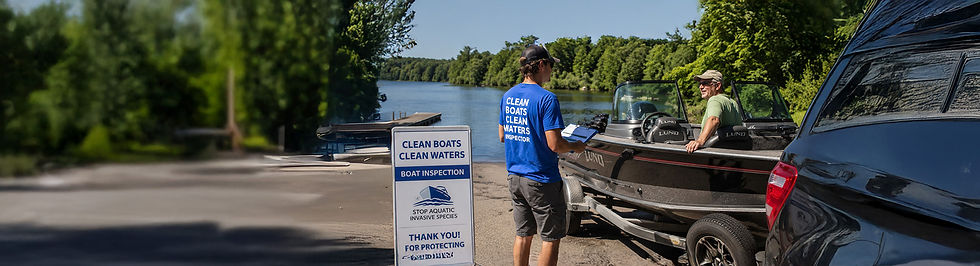
The statewide program places trained inspectors at public boat landings to educate boaters and inspect boats and trailers entering and leaving Wisconsin lakes. Inspectors look for aquatic plants, zebra mussels and other invasive species that can hitchhike from one lake to another, while encouraging every boater to Clean, Drain and Dry before launching elsewhere.
Gilmore Lake Boat Inspections
During the 2026 season, Gilmore Lake has been assigned approximately 290 hours of weekend inspections. Jordan Schirmer is is Gilmore Lake's dedicated Clean Boats Clean Waters inspector.
Jordan staffs the Gilmore Lake landing on weekends from 7:00 a.m. to 2:30 p.m.—the busiest hours for launching and retrieving boats. His work provides an important first line of defense against the introduction of new aquatic invasive species.

Meet our Inspector: Jordan Schirmer
Jordan grew up on the Minong Flowage, and his family has long supported area lakes and conservation efforts.
How You Can Help
Everyone who uses Gilmore Lake plays an important role.
Before launching or before leaving Gilmore Lake—or any lake—remember to:

Inspect your boat, trailer and equipment.

Remove all aquatic plants and debris.

Drain water from live wells, ballast tanks and bilges.

Dispose of unwanted bait properly.

Allow boats and equipment to dry whenever possible before entering another lake.